Trabant University Center
Experiential Design · Wayfinding · Environmental Storytelling
The Trabant University Center serves as a central crossroads for the entire University of Delaware community. Housing dining, event spaces, offices, classrooms, a theater, and fine dining, Trabant is also the primary indoor thoroughfare connecting central campus to Main Street—welcoming students, staff, alumni, and visitors each day.
Role
Communications Manager, Creative & Operations
Experiential branding, environmental storytelling, wayfinding strategy, long-range visioning
Partners
University Student Centers
Division of Student Life Leadership
Office of Communications & Marketing
University Facilities & University Printing
University Dining Services
Objective
Support Trabant’s evolution from a high-traffic campus hub into a future-focused student success center through phased experiential branding, wayfinding, and environmental storytelling—meeting immediate needs while laying groundwork for long-term transformation.
Context
As one of the most heavily used buildings on campus, Trabant must serve many functions at once: destination, passageway, gathering space, and point of welcome. At the same time, the building is envisioned to gradually shift toward a more intentional student success role. This ongoing project balances those realities—designing for a space that is both dynamic and transitional.
Approach
Environmental branding and wayfinding interventions are introduced progressively, allowing the building to evolve without disruption. Each layer is designed to be flexible, scalable, and responsive to changing programs and student needs, while reinforcing a consistent University identity.
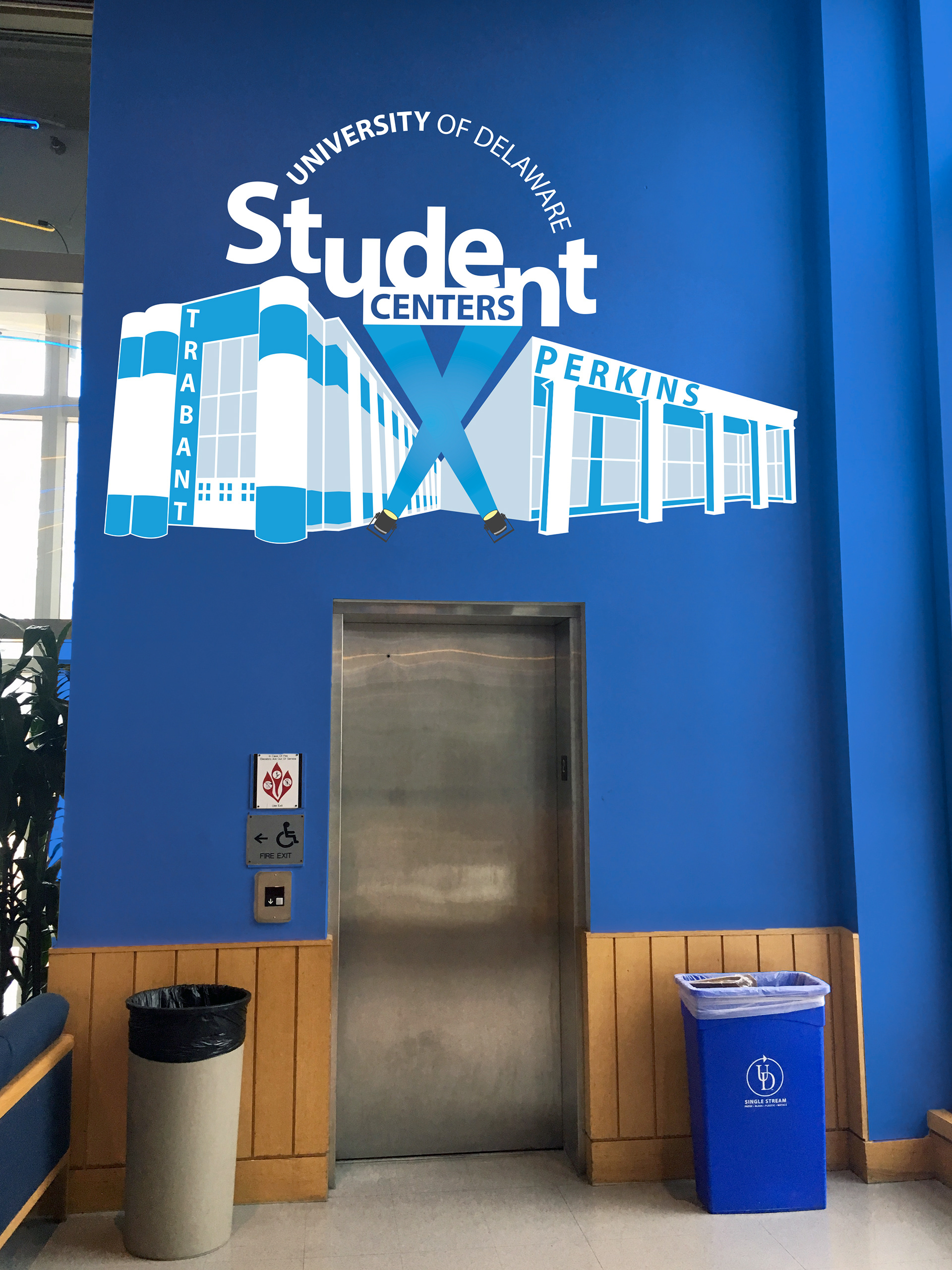
Rather than overt signage, the work focuses on passive cues—visual moments that guide movement, highlight services, and subtly communicate belonging and support. These elements help orient first-time visitors, improve navigation through high-traffic zones, and begin to signal Trabant’s future role as a place where students connect to resources, services, and each other.
Quick, Space Case Studies
Interfaith, Mediation & Prayer Space
Problem
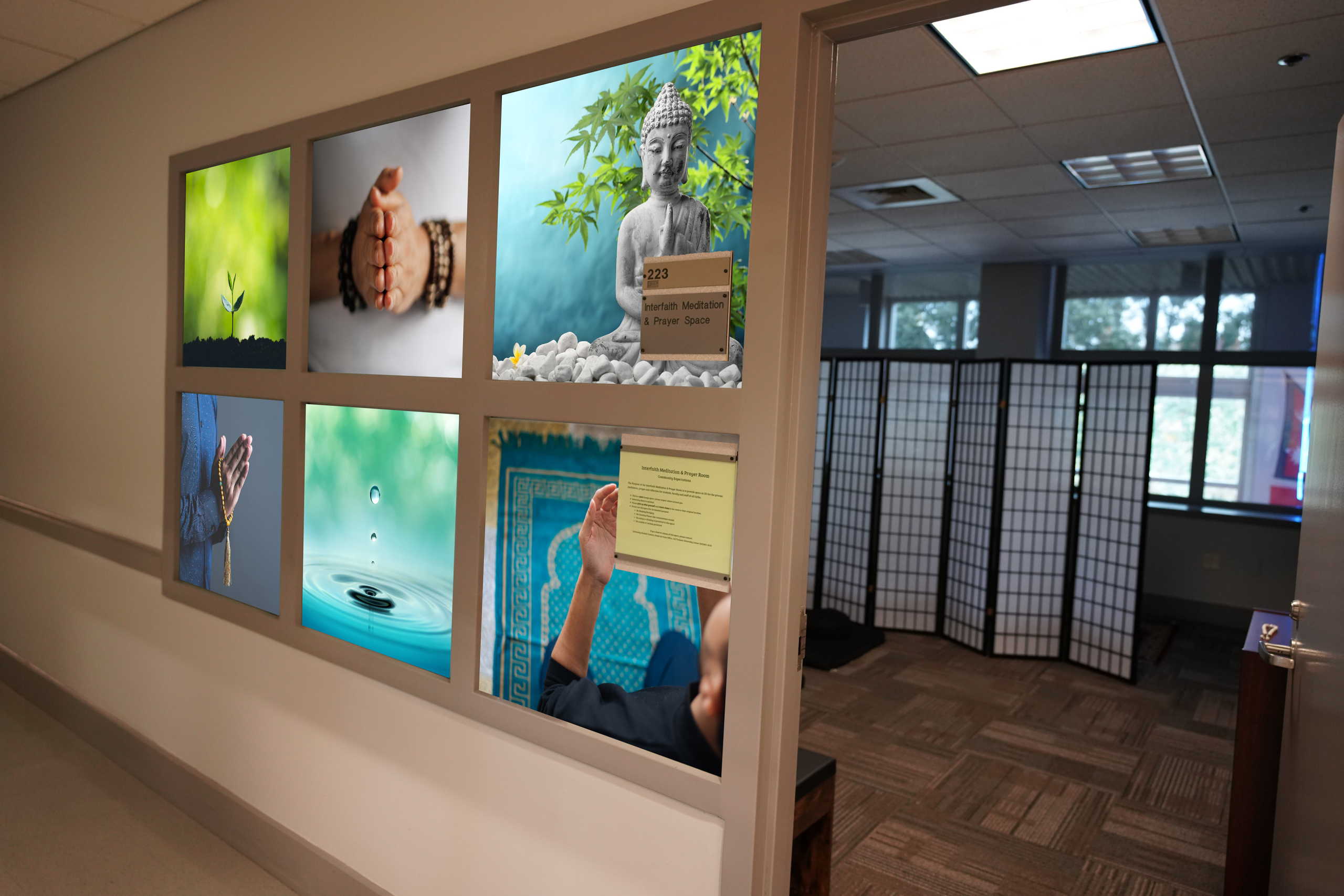
The Interfaith, Mediation & Prayer Space existed within a high-traffic building but lacked visibility, clarity, and a sense of purpose. Many students were unaware of the space or uncertain whether it was intended for them.
Solution
Subtle environmental cues and intentional signage were introduced to clearly identify the space while preserving privacy and calm. The design balances visibility with respect, signaling inclusion, reflection, and belonging without disrupting the surrounding circulation.
Veteran’s Storefront
Problem
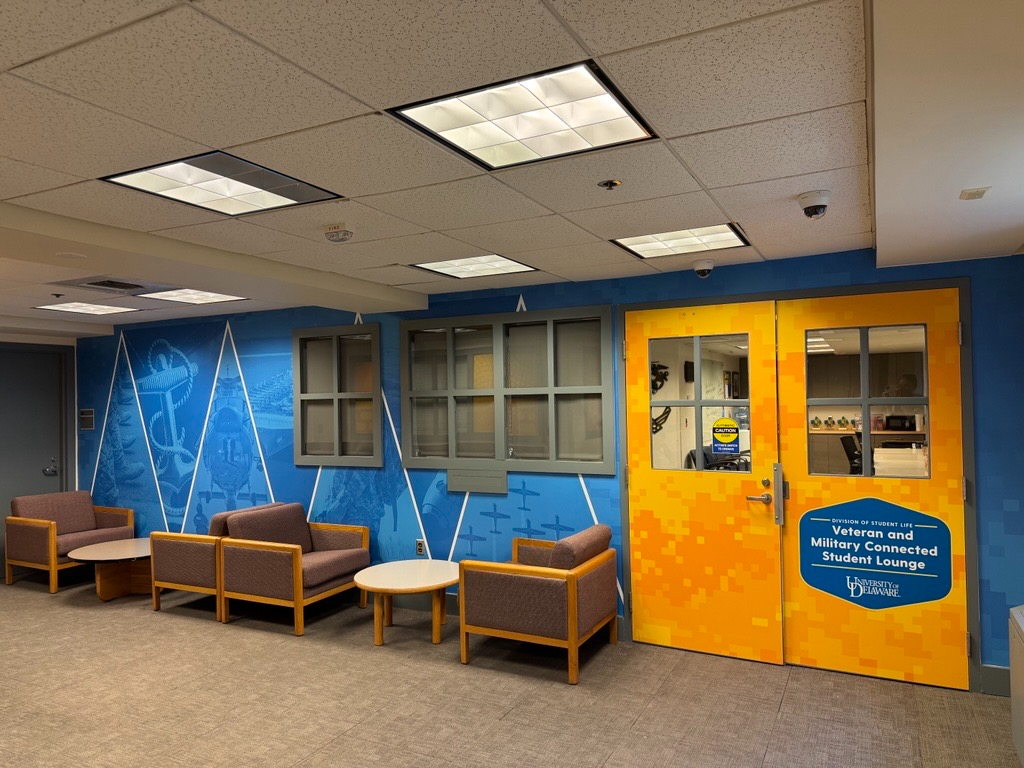
The Veteran’s space lacked a clear storefront identity, making it difficult for student veterans and families to locate services and feel represented within the larger campus environment.
Solution
Environmental branding was developed to create a recognizable, respectful presence that honors service while integrating seamlessly into the Student Centers’ aesthetic. The storefront now communicates purpose, support, and visibility for veteran-affiliated students.
Digital & Print Advertising Systems + Spaces
Problem
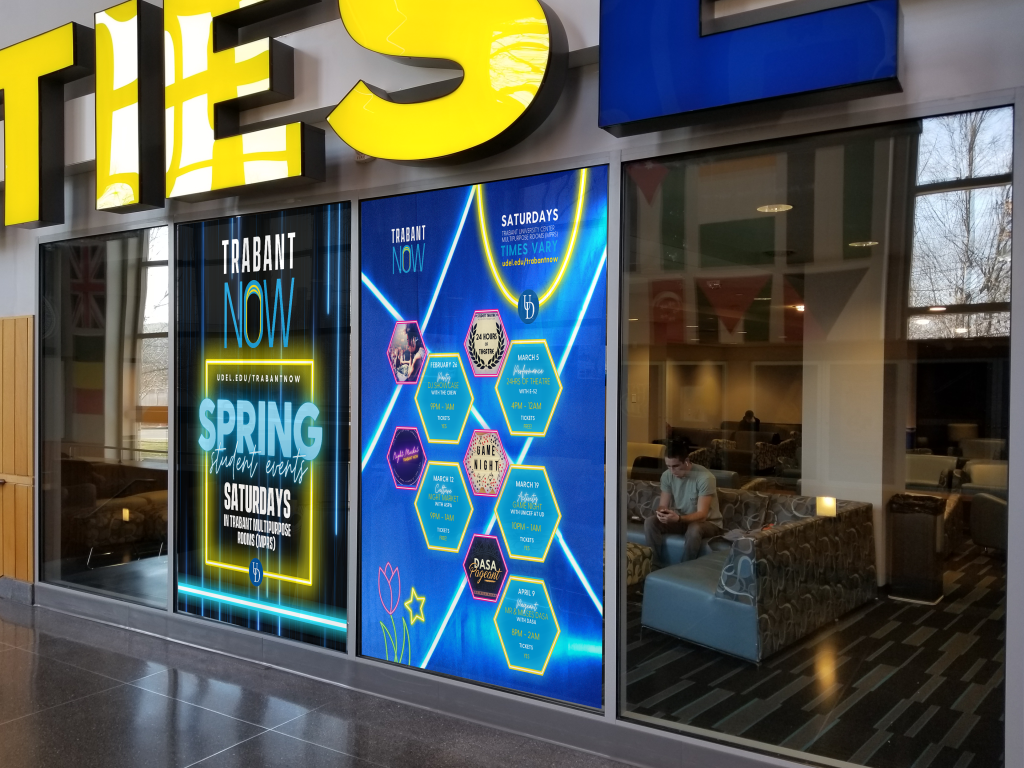
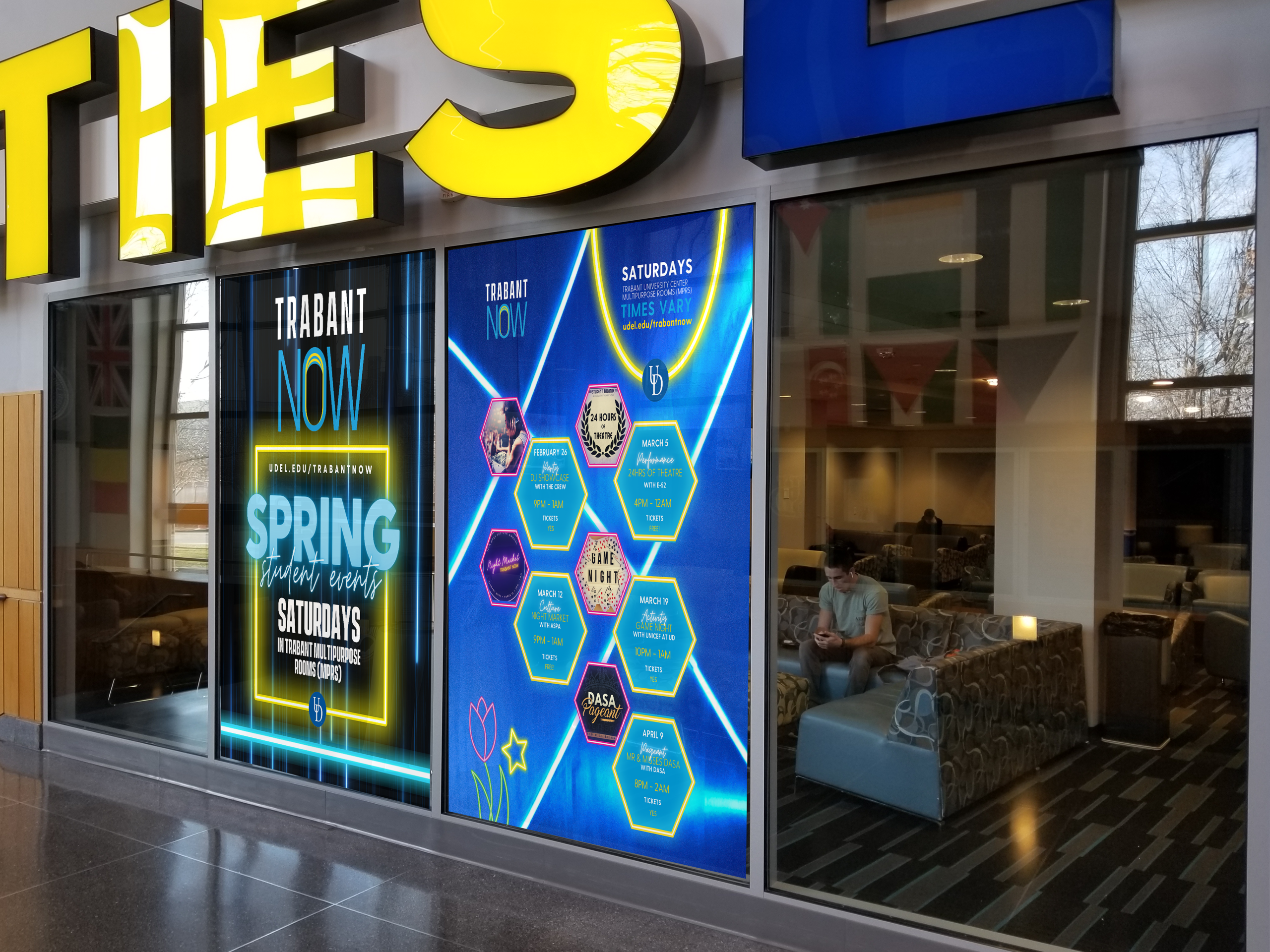
Messaging across Perkins and Trabant was fragmented, with limited coordination between print and digital advertising and inconsistent placement that reduced visibility and effectiveness.
Solution
A coordinated system of digital signage zones and print display areas was established to streamline messaging, reduce clutter, and generate a new source of revenue. This framework supports timely Student Life and University communications while allowing flexibility for events, campaigns, and evolving campus priorities.
Multilingual Welcomes
Problem
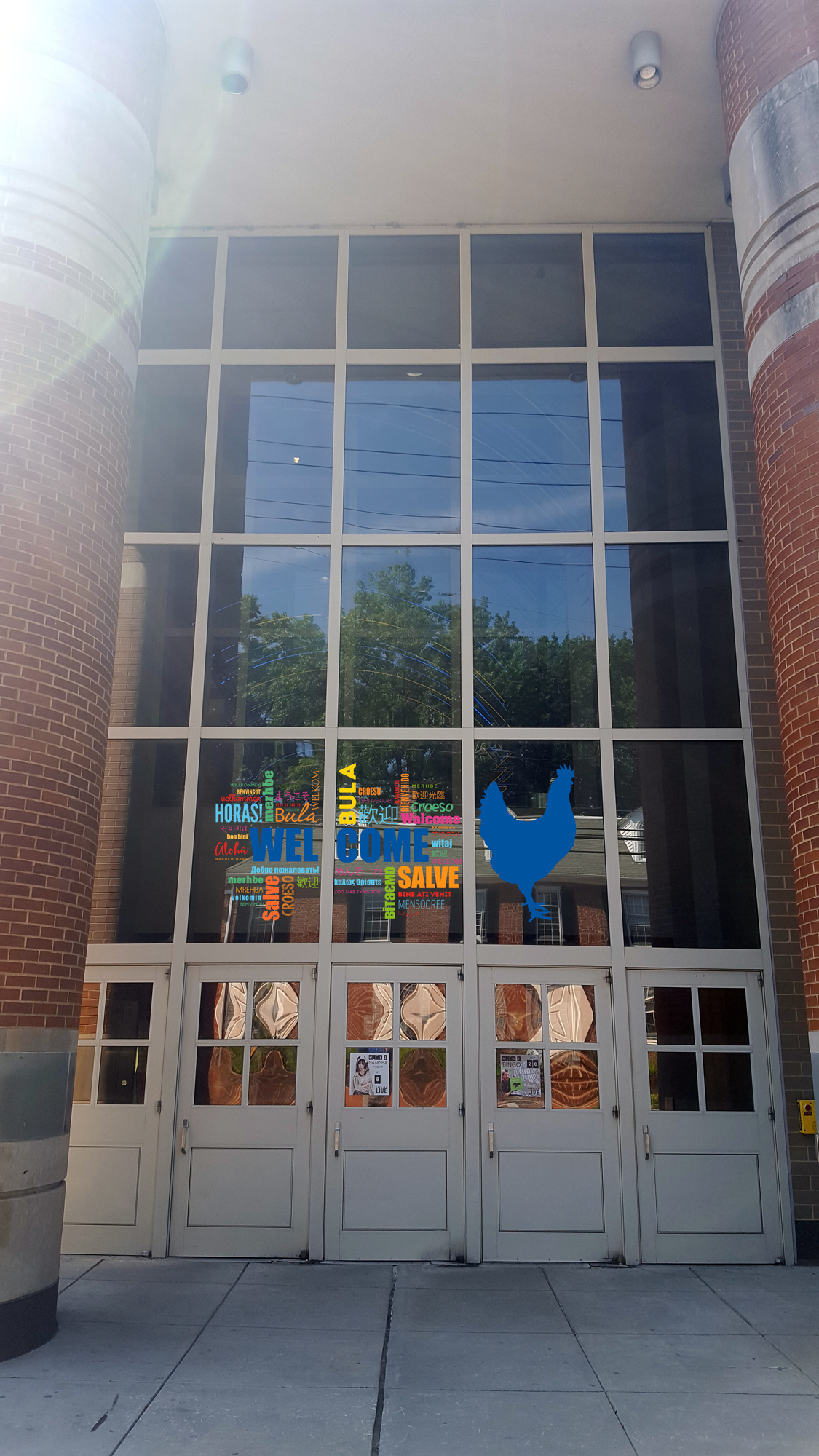
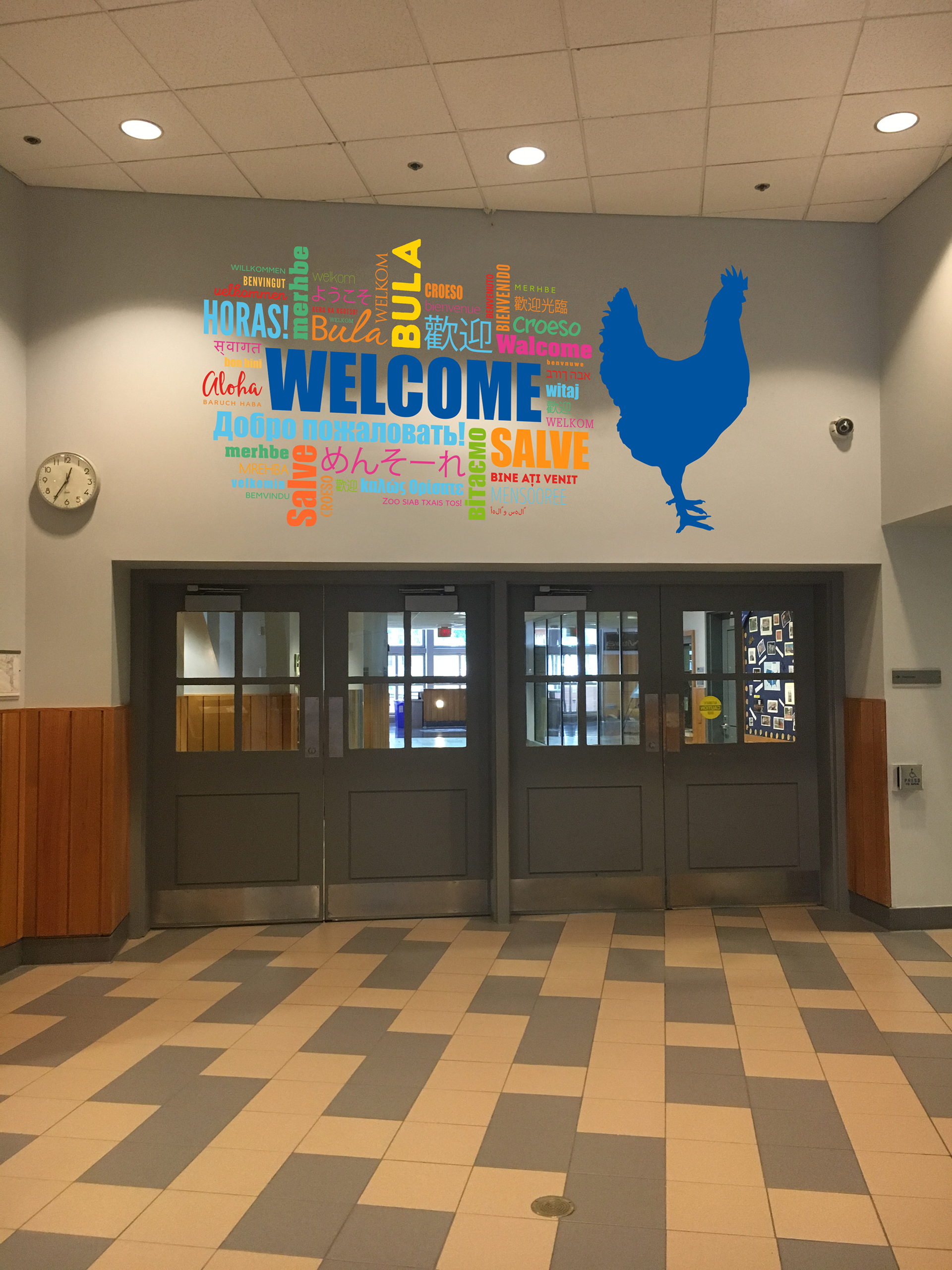
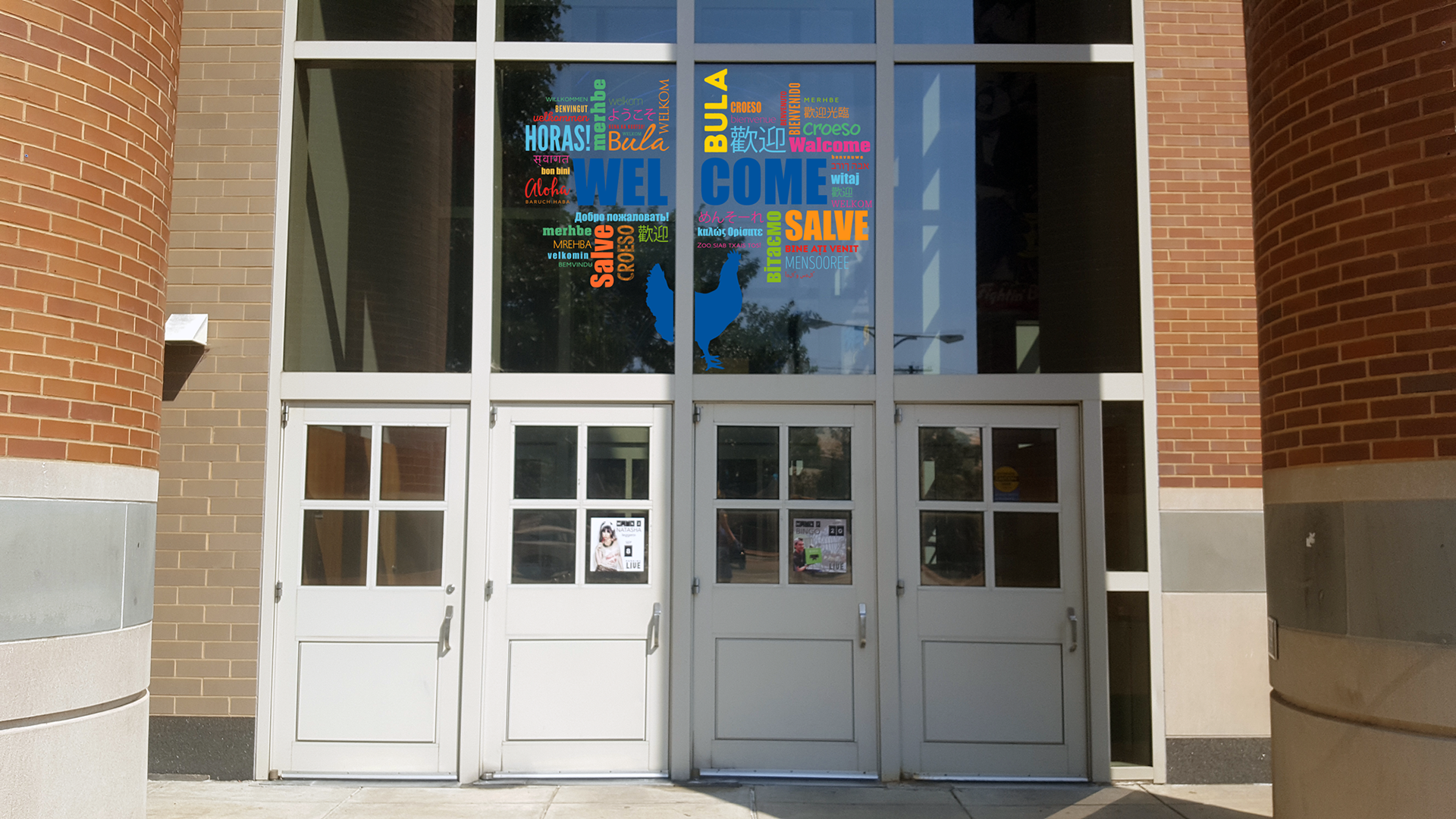
As a primary point of entry for visitors and new students, Trabant did not fully reflect the linguistic and cultural diversity of the UD community and our international students and visitors.
Solution
Multilingual welcome elements were introduced to create an immediate sense of inclusion and recognition. These visual touchpoints reinforce that Trabant—and UD—are welcoming spaces for all identities and backgrounds.
The Community to Experience Mural
Problem
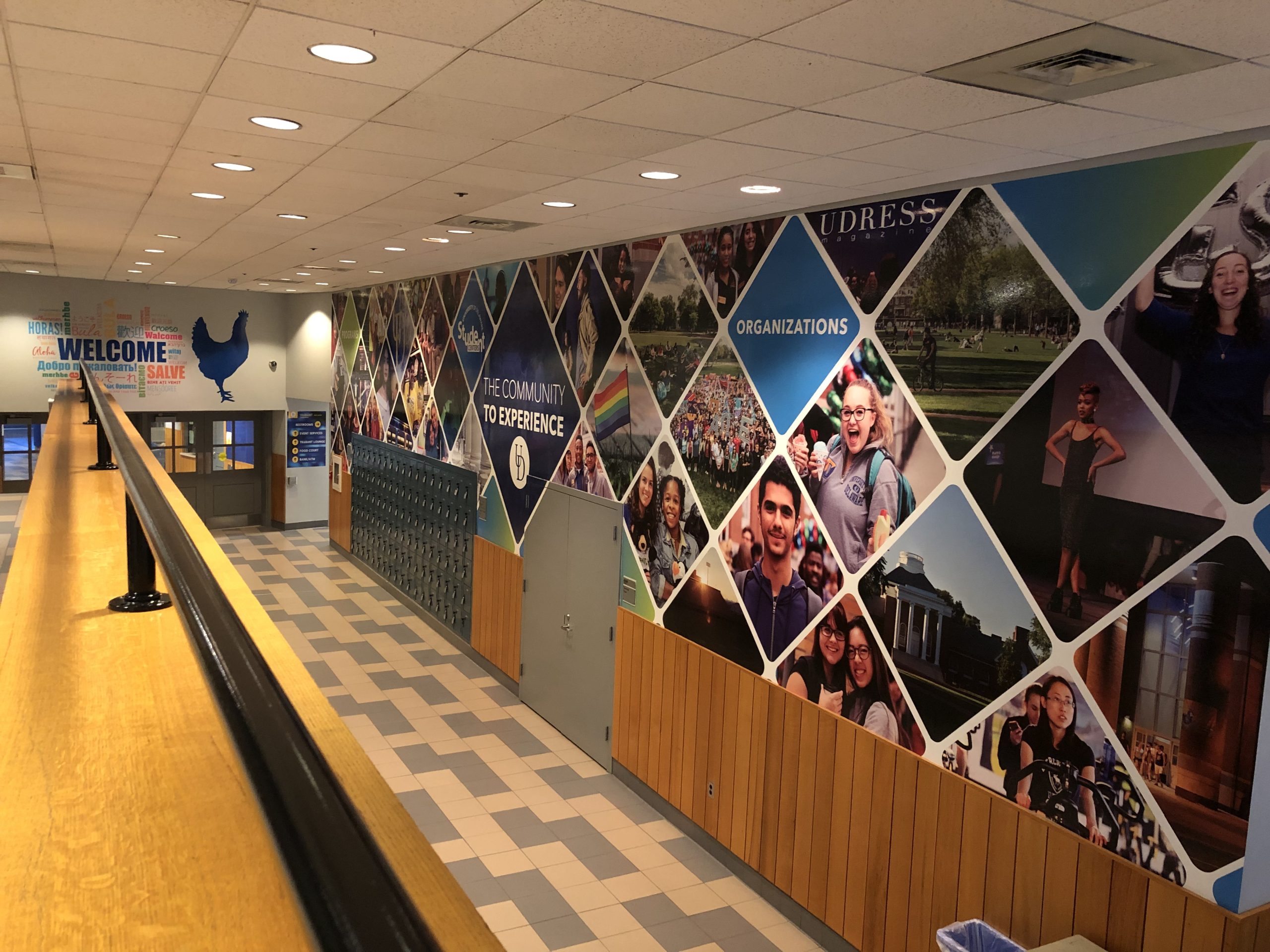
Large circulation walls in the Multipurpose Room Hallway a freqented and large-scale campus event space, offered high visibility but lacked narrative or emotional connection, missing opportunities to reflect student life and community values.
Solution
A large-scale mural was introduced to transform the transitional space into experiential storytelling. The artwork celebrates community, connection, and student experience—turning movement through the building into a moment of engagement and pride and a highlight of the New Student Orientation Experience that takes place in the space every summer, welcoming brand new students and families to the UD Student Experience.
Outcome
Through phased implementation, Trabant becomes more legible, welcoming, and student-centered—supporting daily campus flow while quietly advancing a longer-term vision of student success. The result is a building that grows alongside the community it serves, adapting over time while remaining distinctly and authentically UD.